
Hire Developers vs In-House Team
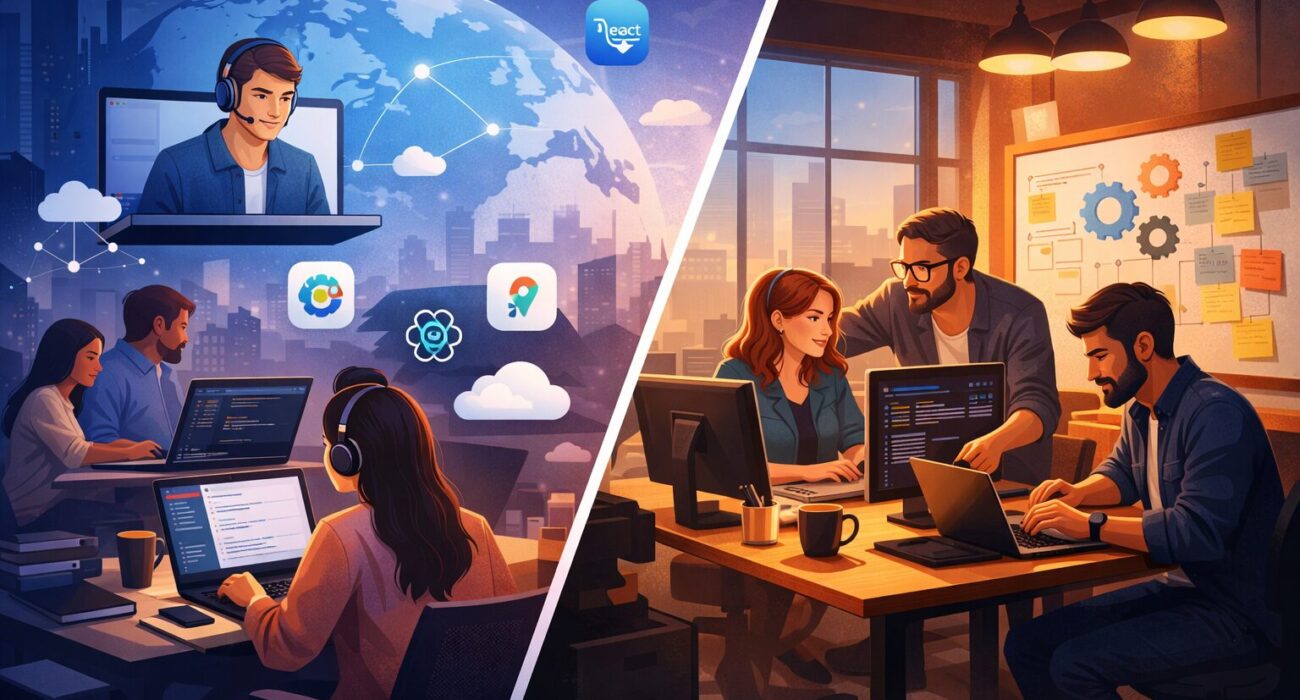
Hire Developers vs In-House Team When businesses evaluate growth strategies, one of the most critical decisions they face is whether to Hire Developers vs In-House Team. This choice directly impacts project timelines, cost efficiency, scalability, and overall business success. In today’s fast-paced digital landscape, companies must stay flexible and responsive to changing market demands, which makes this decision even more crucial. Hiring an in-house team offers complete control, seamless communication, and strong alignment with company culture. However, it often comes with higher costs, including salaries, benefits, training, and infrastructure. On the other hand, choosing to hire developers externally, whether through agencies or dedicated professionals, provides access to a global talent pool, faster onboarding, and reduced operational expenses. Businesses can quickly scale teams up or down depending on project requirements, making it an ideal option for startups and growing companies.
For companies looking to build high-performance digital solutions, services like Laravel development, React JS applications, and React Native mobile apps play a vital role. Partnering with experts ensures high-quality outcomes without the long-term commitment of hiring full-time staff. Additionally, modern UI/UX design using Figma and interactive design tools like Framer helps businesses create engaging user experiences that drive conversions. Choosing the right approach depends on your business goals, budget, and project complexity.
At Inzo Dev, we help businesses make the right decision by offering expert development services tailored to your needs. Whether you want to build scalable web applications or intuitive mobile solutions, our team ensures quality and efficiency. Explore our services:
Laravel, React JS, React Native, UI/UX Design in Figma, Framer.
Hire Developers vs In-House Team: A Strategic Business Choice
The debate between hiring developers vs an in-house team has become increasingly important as businesses aim to scale efficiently while maintaining control over operations. Choosing the right approach directly impacts productivity, cost management, and long-term growth. Companies today are no longer limited to traditional hiring models; they can now access global talent pools or invest in building dedicated internal teams.
When businesses evaluate this decision, they must consider factors such as budget, project complexity, and time-to-market. For instance, companies working on modern applications often require expertise in technologies like Laravel, ReactJS, or React Native. Hiring external developers with these specialised skills can accelerate development without the lengthy recruitment process associated with in-house teams.
Ultimately, the choice between hiring developers and building an internal team is not one-size-fits-all. It depends on how a company prioritises flexibility, control, and scalability in its operations.
Cost Efficiency vs Operational Control
One of the biggest advantages of choosing to hire developers externally is the significant reduction in overhead costs. When businesses outsource development work, they eliminate expenses related to salaries, employee benefits, office infrastructure, and training programs. This approach is particularly beneficial for startups and small businesses that need to optimise their budgets while still accessing high-quality technical expertise.
Additionally, outsourcing allows companies to pay only for the services they need. Whether it’s front-end development using ReactJS or designing user interfaces through UI/UX Design in Figma, businesses can engage experts on a project basis. This flexibility ensures better cost control and resource allocation.
On the other hand, an in-house team provides greater control over workflows and internal processes. Teams working within the organisation are more aligned with company goals, culture, and communication standards. This alignment often results in smoother collaboration, faster decision-making, and improved consistency in project execution.
However, maintaining an in-house team comes with ongoing financial commitments. Salaries, benefits, and operational expenses can quickly add up, especially when scaling the team. Therefore, companies must carefully weigh the trade-off between cost efficiency and operational control when deciding between hiring developers and building an internal team.
Scalability and Business Growth
Scalability is another critical factor in the Hire developers vs in-house team discussion. Businesses that need to grow rapidly often find it easier to scale by hiring external developers. Outsourcing provides immediate access to a large pool of skilled professionals, allowing companies to expand their development capacity without delays.
For example, if a business wants to launch a mobile application quickly, hiring experts in React Native can significantly reduce development time. Similarly, projects requiring modern design frameworks like Framer can benefit from specialised external talent. This ability to quickly onboard skilled professionals enables businesses to respond to market demands more effectively.
In contrast, scaling an in-house team is a slower and more resource-intensive process. Recruitment, onboarding, and training can take months, which may delay project timelines. While an internal team offers stability and long-term commitment, it may not provide the agility needed in fast-paced industries.
That said, in-house teams can be advantageous for businesses with ongoing, complex projects that require deep institutional knowledge. These teams develop a strong understanding of company systems and processes over time, which can enhance efficiency in the long run.
In conclusion, the choice between hiring developers and maintaining an in-house team depends on a company’s priorities. Businesses seeking flexibility and rapid growth often benefit from outsourcing, while those prioritising control and long-term stability may prefer building an internal team. A balanced approach leveraging both models can also be an effective strategy for achieving sustainable growth.
Project Requirements Shape the Decision
The choice between Hire developers vs in-house team often depends heavily on the size, timeline, and complexity of a project. Businesses working on short-term or highly specialised projects may find it more practical to hire external developers rather than investing time and resources in building a full in-house team. For example, if a company needs to quickly develop a web application using technologies like Laravel or ReactJS, outsourcing can significantly reduce the time required to get started.
Project complexity also plays a crucial role. Highly technical or niche projects often demand specific expertise that may not be readily available within an internal team. In such cases, outsourcing becomes a strategic advantage, as it allows businesses to bring in experts with proven experience in particular frameworks or tools. Additionally, when deadlines are tight, external developers can be onboarded quickly, enabling faster execution and delivery.
On the other hand, larger and long-term projects may benefit from the consistency and deeper involvement of an in-house team. Internal developers are more familiar with the company’s systems, goals, and workflows, which helps maintain continuity and quality over time. Therefore, understanding the project scope is essential when evaluating the Hire developers vs in-house team approach.
Access to Global Talent and Specialised Skills
Outsourcing provides businesses with access to a global pool of skilled developers, making it easier to find professionals with niche expertise. This is particularly valuable in today’s competitive digital landscape, where technologies evolve rapidly and require specialised knowledge. By choosing to hire developers externally, companies are not limited by geographic constraints and can select talent based on skill rather than location.
For instance, if a business is developing a mobile application, hiring experts in React Native ensures high-quality performance and faster development cycles. Similarly, projects requiring modern interface design can benefit from specialists in UI/UX Design in Figma or advanced prototyping tools like Framer. This level of specialisation can be difficult and costly to maintain within an in-house team.
Moreover, outsourcing allows companies to scale their workforce up or down based on project needs. This flexibility helps optimise costs while maintaining high standards of work. As a result, the Hire developers vs in-house team decision often leans toward outsourcing when businesses require diverse skill sets and rapid adaptability.
Stability, Communication, and Long-Term Growth
While outsourcing offers flexibility and access to global talent, in-house teams provide advantages in terms of communication, stability, and long-term alignment. Internal teams work closely together within the same organisational structure, which fosters better collaboration and clearer communication channels. This can be especially important for complex projects that require frequent updates and continuous feedback.
In-house developers also contribute to long-term project stability. Since they are deeply integrated into the company, they develop a strong understanding of its goals, processes, and technical infrastructure. This familiarity helps ensure consistency in development and reduces the risk of miscommunication or project delays.
Furthermore, having a dedicated in-house team supports long-term growth and innovation. Employees become invested in the company’s success, which often leads to higher commitment and productivity. While the initial investment in hiring and maintaining an internal team may be higher, the long-term benefits can outweigh these costs for businesses with ongoing development needs.
In conclusion, the Hire developers vs in-house team decision should be based on a careful evaluation of project requirements, access to expertise, and long-term goals. A hybrid approach combining outsourced talent with a strong internal team can often provide the best balance between flexibility and stability.
Startups and Cost-Effective Growth
For startups, the decision between Hire developers vs in-house team is often driven by budget constraints and risk management. Building an in-house team requires significant upfront investment, including recruitment costs, salaries, office infrastructure, and employee benefits. For early-stage companies with limited funding, this can place unnecessary financial strain on operations.
As a result, many startups prefer to hire developers externally to minimise initial investment while still gaining access to high-quality technical expertise. Outsourcing allows them to work with experienced professionals without long-term commitments. For example, startups developing web platforms can quickly onboard experts in Laravel or ReactJS without the delays of traditional hiring processes.
This approach also reduces risk. Instead of committing to permanent hires, startups can test ideas, validate products, and pivot strategies with greater flexibility. By choosing external developers, they can allocate resources more efficiently and focus on core business activities such as marketing and product development. In this context, the Hire developers vs in-house team decision becomes a strategic move to ensure sustainable and agile growth.
Time-to-Market and Competitive Advantage
Time-to-market is a critical factor in today’s fast-paced digital landscape, and the Hire developers vs in-house team decision has a direct impact on how quickly a product can be launched. Hiring and training an in-house team can take months, delaying development timelines and potentially causing businesses to miss market opportunities.
In contrast, outsourcing enables companies to start projects almost immediately. External developers are often ready to contribute from day one, bringing pre-existing knowledge and experience to the table. For instance, businesses aiming to launch mobile applications can benefit from hiring specialists in React Native, significantly reducing development time.
Additionally, external teams are typically accustomed to working on tight deadlines and delivering results efficiently. This speed and efficiency can provide a strong competitive advantage, especially in industries where being first to market can determine success. Faster delivery not only improves customer acquisition but also allows businesses to gather feedback and make improvements more quickly.
Therefore, when speed is a priority, outsourcing becomes a compelling option in the Hire developers vs in-house team comparison.
Diverse Experience and Innovation
Another important advantage of hiring external developers is the diverse experience they bring from working across multiple industries and projects. Unlike in-house teams, which may be limited to a single company’s perspective, external developers are exposed to a wide range of challenges, technologies, and best practices.
This diversity often leads to more innovative solutions and creative problem-solving. For example, developers experienced in modern design tools like UI/UX Design in Figma or prototyping platforms such as Framer can introduce fresh ideas that enhance user experience and product functionality.
Moreover, external developers are continuously updating their skills to stay competitive in the global market. This ensures that businesses benefit from the latest technologies and industry trends without having to invest heavily in training programs for an in-house team.
In conclusion, the Hire developers vs in-house team decision plays a crucial role in shaping a company’s innovation strategy. While in-house teams provide stability and long-term alignment, external developers offer flexibility, speed, and a wealth of diverse experience. For many businesses, especially startups, a hybrid approach can deliver the best results by combining the strengths of both models.
Long-Term Development and Stability
When evaluating Hire developers vs in-house team, businesses with long-term product goals often lean toward building an internal team. In-house developers are deeply integrated into the company’s processes, tools, and vision, making them well-suited for ongoing development. Over time, they gain a strong understanding of the product architecture, user expectations, and internal workflows, which contributes to consistent quality and stability.
For companies managing complex systems or continuously evolving platforms, this level of familiarity is crucial. In-house teams can respond quickly to internal needs, implement updates efficiently, and maintain a steady development pace. Their close collaboration with other departments, such as marketing, design, and customer support, also improves alignment and reduces miscommunication.
Although hiring and maintaining an internal team requires a higher upfront investment, it can provide long-term value for businesses that need continuous innovation and product refinement. In the context of Hire developers vs in-house team, organisations focused on sustainability and deep product ownership often find in-house teams to be a reliable choice.
Rapid Adoption of New Technologies
On the other hand, businesses aiming to stay competitive in fast-changing markets may benefit from choosing to hire developers externally. One of the biggest advantages of outsourcing is the ability to quickly adopt the latest technologies without investing heavily in training or recruitment.
External developers are often specialists in modern frameworks and tools, allowing companies to implement advanced solutions efficiently. For example, businesses can leverage expertise in ReactJS for dynamic web applications or React Native for cross-platform mobile development. Similarly, backend solutions using Laravel can be deployed rapidly with the help of experienced professionals.
In addition, design-focused projects can benefit from experts in UI/UX Design in Figma and interactive prototyping tools like Framer. This access to cutting-edge skills ensures that businesses remain innovative and competitive without the delays associated with building internal expertise.
Therefore, in the Hire developers vs in-house team comparison, outsourcing stands out as a flexible and efficient way to embrace technological advancements.
Maintenance, Support, and Strategic Balance
Maintenance and ongoing support are critical factors that businesses must consider when deciding between hiring developers and building an in-house team. While outsourcing is ideal for development and rapid deployment, long-term maintenance often requires consistent oversight and quick response times.
In-house teams excel in this area because they are always available to address issues, implement updates, and ensure system stability. Their continuous involvement with the product allows them to identify potential problems early and maintain performance standards over time. This makes them particularly valuable for businesses that rely on uninterrupted service and regular updates.
However, external developers can also provide maintenance and support through dedicated service agreements. This approach allows businesses to balance cost efficiency with reliability, especially when working with experienced development partners.
Ultimately, the Hire developers vs in-house team decision should account for both immediate development needs and long-term support requirements. Many organisations find success in a hybrid model using external developers for innovation and scalability while relying on an in-house team for maintenance and continuity. This balanced strategy ensures both flexibility and stability in an ever-evolving digital landscape.
Focus on Core Business and Strategic Growth
In the discussion of Hire developers vs in-house team, one of the most compelling advantages of outsourcing is the ability for companies to focus on their core business operations. By choosing to hire developers externally, organizations can delegate technical tasks to experienced professionals while concentrating on strategic priorities such as marketing, customer acquisition, and business development.
This approach is particularly beneficial for companies undergoing digital transformation. Instead of allocating internal resources to manage complex development processes, businesses can rely on external experts skilled in technologies like Laravel or ReactJS. Similarly, mobile and design-focused projects can be efficiently handled by specialists in React Native, UI/UX Design in Figma, and Framer.
Outsourcing not only improves operational efficiency but also ensures that projects are handled by professionals with up-to-date industry knowledge. As a result, businesses can accelerate innovation while maintaining a clear focus on their long-term goals. In the Hire developers vs in-house team comparison, outsourcing often emerges as a strategic enabler for growth and efficiency.
Time Investment in Building an In-House Team
While in-house teams offer control and alignment, they require a significant investment of time and effort to build. Recruitment alone can take weeks or even months, especially when searching for highly skilled developers. Once hired, employees need onboarding and training to become fully productive within the organization.
This extended timeline can delay project execution and impact overall business performance. In fast-paced industries, such delays may result in missed opportunities or slower responses to market demands. Additionally, training programs and continuous skill development add to the operational burden, making in-house hiring a long-term commitment rather than a quick solution.
Despite these challenges, in-house teams provide benefits such as consistent communication, cultural alignment, and a deeper understanding of company objectives. However, when speed and flexibility are critical, the Hire developers vs in-house team decision often leans toward outsourcing as a more practical alternative.
Driving Digital Transformation Success Hire Developers vs In-House Team
Digital transformation has become a priority for businesses across industries, and the Hire developers vs in-house team decision plays a crucial role in determining its success. Companies must adopt new technologies, modernize systems, and deliver seamless digital experiences to remain competitive.
Hiring external developers enables organizations to quickly access specialized skills and implement advanced solutions without delays. This agility is essential for keeping up with rapidly evolving market trends and customer expectations. External teams bring diverse experience, allowing businesses to apply best practices and innovative approaches to their digital initiatives.
On the other hand, in-house teams contribute to long-term transformation by ensuring continuity and maintaining institutional knowledge. They are instrumental in managing ongoing improvements and aligning digital strategies with business objectives.
Ultimately, the most effective approach often involves a combination of both models. By leveraging external expertise for rapid implementation and maintaining an internal team for ongoing management, businesses can achieve a balanced and sustainable digital transformation. The Hire developers vs in-house team strategy, when carefully planned, becomes a key driver of innovation, efficiency, and long-term success.
Follow Us:
Facebook, Twitter (X), Instagram.com, Linkedin.