
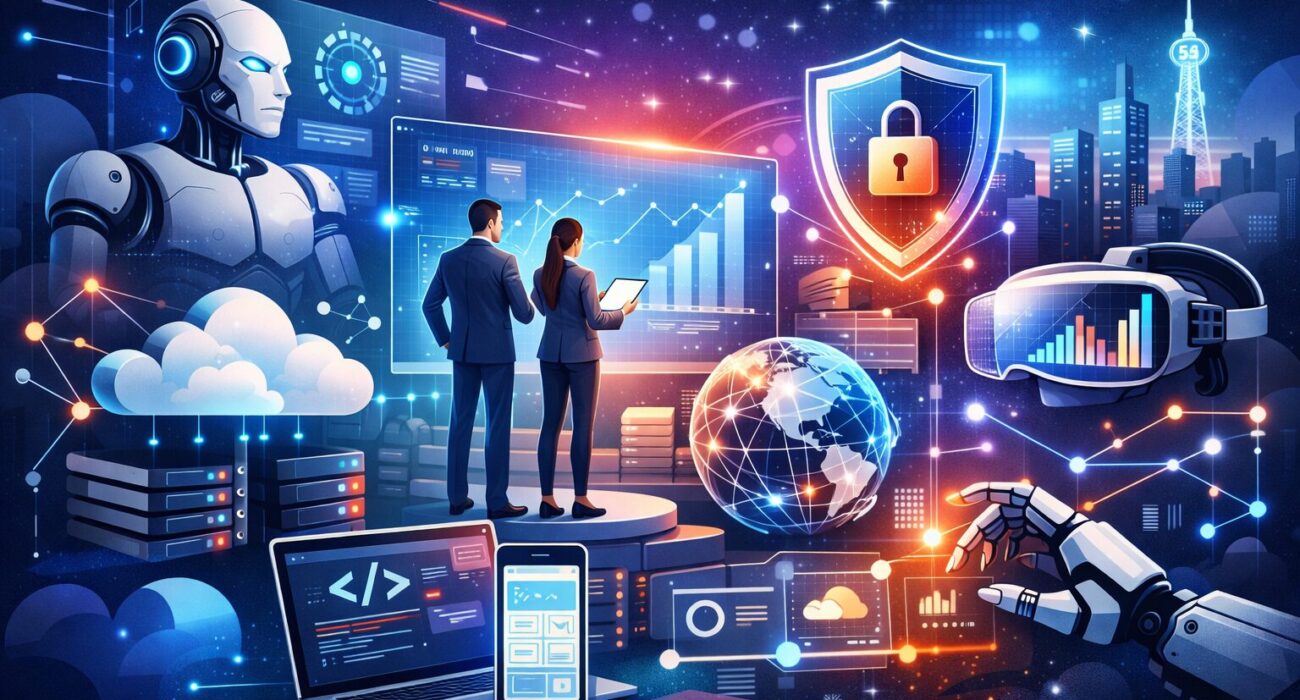
The Future of IT: Trends Every Business Must Watch
The Future of IT is evolving at an unprecedented pace, reshaping how businesses operate, compete, and grow in a digital-first world. From artificial intelligence and cloud computing to advanced frameworks and user-centric design, companies must stay ahead of these trends to remain relevant. Businesses that embrace innovation early are more likely to gain a competitive advantage, improve efficiency, and deliver exceptional customer experiences. At Inzo Dev, we understand that technology is no longer just a support function; it is the backbone of modern business strategy.
As organisations continue to digitise their operations, technologies like AI-driven automation and scalable web solutions are becoming essential. Modern frameworks such as Laravel and React are helping businesses build faster, more secure, and highly interactive applications. If you’re looking to upgrade your systems, explore our Laravel services or build dynamic interfaces with React JS. These tools not only enhance performance but also ensure long-term scalability.
Emerging Technologies Driving Innovation
One of the most significant aspects of The Future of IT is the rise of emerging technologies that are transforming industries. Mobile-first development, powered by frameworks like React Native, is enabling businesses to reach users on the go. Meanwhile, UI/UX design is becoming a critical factor in customer retention. Our UI/UX design in Figma ensures that your digital products are not only functional but also visually engaging. Additionally, tools like Framer are revolutionising how websites are designed and prototyped, allowing faster deployment and better user experiences.
Why Businesses Must Adapt Now
Adapting to the Future of IT is no longer optional; it’s a necessity. Companies that fail to innovate risk falling behind competitors who are leveraging technology to optimise operations and improve customer satisfaction. Whether it’s adopting cloud solutions, enhancing cybersecurity, or implementing modern development practices, staying updated is crucial for sustainable growth. Partnering with a forward-thinking company like Inzo Dev ensures that your business is equipped with the right tools and strategies to thrive in a rapidly changing digital landscape.
Stay connected and explore more insights. Follow Us: Facebook, X, Instagram, LinkedIn.
What is the Future of IT, and why is it important for businesses?
The Future of IT refers to the continuous evolution of technologies that shape how businesses operate, communicate, and deliver value. It includes advancements in artificial intelligence, cloud computing, cybersecurity, and scalable software development. For modern organisations, understanding The Future of IT is no longer optional, as it directly impacts competitiveness, efficiency, and customer experience. Companies that fail to adapt often struggle to keep up with changing market demands, while those that embrace innovation gain a significant edge.
Businesses rely on IT infrastructure to streamline operations, improve decision-making, and enhance user engagement. With the rapid pace of digital transformation, IT is becoming deeply integrated into every department, from marketing to finance. This shift makes it essential for leaders to stay informed about emerging trends and technologies.
Driving Business Innovation
The Future of IT enables businesses to innovate faster by leveraging tools such as cloud platforms and agile development frameworks. Services like Laravel and React JS help companies build scalable and dynamic applications that meet modern user expectations.
Strengthening Digital Presence
Organisations can also enhance their digital presence through user-focused design and development solutions, such as UI UX design in Figma and Frame/. To stay updated with insights and trends, Follow Us on Facebook, x, Instagram, and LinkedIn.
How is artificial intelligence shaping The Future of IT?
Artificial intelligence is one of the most transformative forces shaping The Future of IT. It allows systems to analyse data, learn patterns, and make decisions with minimal human intervention. AI is being widely adopted across industries to improve efficiency, reduce operational costs, and deliver personalised experiences. From chatbots to predictive analytics, AI technologies are redefining how businesses interact with customers and manage internal processes.
Organisations are increasingly integrating AI into their IT ecosystems to automate repetitive tasks and gain valuable insights from large datasets. This not only accelerates decision-making but also enhances accuracy. As AI continues to evolve, it is expected to become even more embedded in everyday business operations.
Enhancing Customer Experience
AI-powered tools enable businesses to provide personalised recommendations and faster support. Combined with technologies like https://inzodev.com/service/react-native/, companies can create intelligent mobile applications that respond to user behaviour in real time.
Improving Operational Efficiency
AI also improves backend operations by optimising workflows and identifying inefficiencies. Businesses leveraging AI-driven systems alongside modern frameworks such as Laravel can significantly boost productivity. Stay informed about innovations in The Future of IT by following Facebook, x, Instagram, and LinkedIn.
Why is cloud computing essential in The Future of IT?
Cloud computing is a fundamental pillar of The Future of IT because it offers flexibility, scalability, and cost efficiency. Instead of relying on physical infrastructure, businesses can access computing resources over the internet, allowing them to scale operations as needed. This adaptability is especially important in today’s fast-changing business environment, where demand can fluctuate rapidly.
Cloud solutions also support remote work, collaboration, and data accessibility, making them indispensable for modern organisations. By adopting cloud technologies, companies can reduce infrastructure costs and focus more on innovation and growth. Additionally, cloud platforms provide robust security features and disaster recovery capabilities, ensuring business continuity.
Supporting Scalable Development
Cloud computing works seamlessly with modern development services such as ReactJS and Laravel, enabling businesses to build and deploy applications efficiently. This combination accelerates time to market and improves overall performance.
Enabling Seamless Collaboration
Teams can collaborate in real time using cloud-based tools, improving productivity and communication. Integrating cloud solutions with design services like UI-UX-design-in-figma enhances workflow efficiency. For more updates on The Future of IT, Follow Us on Facebook, X, Instagram, and LinkedIn.
What role does automation play in modern IT trends?
Automation plays a critical role in shaping The Future of IT by streamlining processes and reducing the need for manual intervention. It involves using technology to perform repetitive tasks, manage workflows, and monitor systems automatically. Businesses are increasingly adopting automation to improve efficiency, minimise errors, and save time.
In modern IT environments, automation is applied across various functions, including software deployment, data management, and customer service. This allows organisations to focus on strategic initiatives rather than routine tasks. As automation tools become more advanced, they are expected to drive even greater productivity and innovation.
Boosting Productivity and Accuracy
Automation reduces human error and ensures consistent performance across processes. When combined with solutions like React Native and ReactJS, businesses can develop applications that operate smoothly and efficiently.
Accelerating Digital Transformation
Automation accelerates digital transformation by enabling faster implementation of new technologies. Services such as Framer and UI-UX-design-in-figma help businesses create automated and user-friendly digital experiences. Stay connected with The Future of IT by following Facebook, X, Instagram, and LinkedIn.
How can businesses prepare for The Future of IT?
Preparing for The Future of IT requires a proactive approach that combines strategic planning, technology adoption, and workforce development. Businesses must first assess their current IT infrastructure and identify gaps that could hinder growth or innovation. This includes evaluating legacy systems, data management practices, and overall digital readiness. By aligning IT strategies with business goals, organisations can create a roadmap that supports long-term success.
Investing in employee training is equally important. As technologies evolve, teams must develop new skills to effectively use modern tools and platforms. Encouraging a culture of continuous learning helps businesses stay competitive and adaptable. Partnering with experienced development providers and adopting scalable solutions also ensures smoother transitions during digital transformation.
Building a Future Ready Infrastructure
Businesses should adopt modern frameworks and scalable technologies such as Laravel and ReactJS to remain agile. These tools support faster development and better performance in dynamic environments.
Embracing Innovation and Collaboration
Collaboration tools and user-centred design solutions like UI-UX-design-in-figma help teams work efficiently and deliver better user experiences. Stay updated on The Future of IT by following Facebook, X, Instagram, and LinkedIn.
Why is cybersecurity critical in The Future of the IT landscape?
Cybersecurity is a cornerstone of The Future of IT because digital transformation increases exposure to cyber threats. As businesses rely more on digital platforms, protecting sensitive data becomes a top priority. Cyberattacks can lead to financial losses, reputational damage, and legal consequences, making strong security measures essential.
Organisations must implement comprehensive security strategies that include data encryption, secure authentication, and regular system monitoring. With the rise of remote work and cloud computing, the attack surface has expanded, requiring businesses to adopt advanced security tools and practices. Cybersecurity is no longer just an IT concern; it is a business-critical function.
Protecting Data and Systems
Businesses should invest in secure development practices and robust frameworks such as Laravel to safeguard applications. Regular updates and vulnerability assessments are also crucial.
Building Customer Trust
Strong cybersecurity measures enhance customer confidence and protect brand reputation. Integrating secure mobile solutions using React Native further strengthens protection. For insights on The Future of IT, follow Facebook, X, Instagram, and LinkedIn.
How does big data influence business decisions today?
Big data plays a significant role in shaping The Future of IT by enabling businesses to make informed, data-driven decisions. Organisations collect vast amounts of data from various sources, including customer interactions, transactions, and digital platforms. By analysing this data, businesses can identify trends, predict outcomes, and optimise strategies.
Data analytics tools help companies uncover valuable insights that improve marketing campaigns, enhance customer experiences, and streamline operations. Instead of relying on intuition, decision makers can use real-time data to guide their actions. This shift leads to more accurate and effective business strategies.
Driving Strategic Insights
Big data allows businesses to understand customer behaviour and market trends. By integrating analytics with platforms built using ReactJS, organisations can create dynamic dashboards and reporting systems.
Enhancing Operational Efficiency
Data-driven insights help identify inefficiencies and optimise processes. Combining analytics with design solutions like UI-UX-design-in-figma ensures better visualisation and usability. To stay informed about The Future of IT, by following Facebook, X, Instagram, and LinkedIn.
What are the top emerging technologies in The Future of IT?
The Future of IT is shaped by several emerging technologies that are transforming how businesses operate and innovate. These include artificial intelligence, blockchain, Internet of Things, augmented reality, and advanced cloud solutions. Each of these technologies offers unique benefits and opportunities for growth.
Businesses that adopt these innovations early can gain a competitive advantage by improving efficiency, enhancing customer experiences, and creating new revenue streams. However, successful implementation requires careful planning and the right technical expertise. Staying informed about these technologies is essential for long-term success.
Transformative Technologies to Watch
Artificial intelligence and machine learning continue to lead The Future of IT by enabling automation and predictive analytics. IoT connects devices and systems, while blockchain enhances transparency and security.
Enabling Innovation Through Development
Modern development tools such as React Native and Framer help businesses bring innovative ideas to life. Combining these technologies with user-focused design ensures successful implementation. Follow Facebook, X, Instagram, and LinkedIn to stay updated on The Future of IT.
How is remote work transforming IT infrastructure?
Remote work is fundamentally reshaping The Future of IT by changing how businesses design and manage their IT infrastructure. Organisations are moving away from centralised, office-based networks toward cloud-based and hybrid environments that support employees working from anywhere. This shift requires robust security protocols, scalable storage solutions, and reliable collaboration tools to maintain productivity and protect sensitive information.
The adoption of remote work has accelerated investments in virtual private networks, cloud computing, and endpoint management systems. These technologies ensure employees can securely access company resources from multiple locations and devices. Businesses must also rethink network capacity, backup strategies, and disaster recovery plans to support a distributed workforce effectively.
Enhancing Collaboration and Flexibility
Cloud platforms and tools like ReactJS and Laravel enable seamless collaboration among remote teams, allowing them to develop and deploy applications efficiently.
Strengthening IT Resilience
Remote work emphasises the need for resilient, scalable IT infrastructure. Services such as UI-UX-Design-In-Figma and Framer help design intuitive digital solutions that support remote workflows. Stay updated on The Future of IT by following Facebook, X, Instagram, and LinkedIn.
Why is digital transformation key to business growth?
Digital transformation is central to The Future of IT because it enables businesses to streamline operations, improve customer engagement, and explore new revenue streams. By integrating modern technologies like cloud computing, AI, and analytics, companies can respond faster to market demands and deliver more personalised experiences. Digital transformation also allows organisations to automate repetitive tasks, reduce costs, and enhance decision-making with data-driven insights.
Adopting digital transformation is no longer optional; it is essential for remaining competitive. Companies that resist modernisation risk inefficiency and missed opportunities, while digitally mature organisations can scale faster and innovate more effectively.
Accelerating Innovation
Services such as React Native and Laravel help businesses build scalable, high-performance applications that support growth and digital transformation initiatives.
Improving Operational Efficiency
Digital transformation also enhances workflow efficiency and internal collaboration. User-focused design services like UI-UX-Design-In-Figma and Framer ensure technology adoption is intuitive. For insights on The Future of IT, follow Facebook, X, Instagram, and LinkedIn.
How does The Future of IT improve customer experience?
The Future of IT improves customer experience by leveraging advanced technologies to deliver faster, more personalised, and seamless interactions. Businesses can use AI, big data analytics, and automation to understand customer behaviour, predict preferences, and provide real-time solutions. Digital platforms and responsive applications allow customers to engage with businesses through multiple channels, increasing convenience and satisfaction.
Investing in IT innovations enables companies to reduce response times, improve product recommendations, and streamline service delivery. Modern IT tools also support proactive engagement, helping businesses anticipate customer needs before issues arise.
Personalisation Through Technology
Services like React Native and ReactJS help create interactive, customer-centric applications that enhance engagement and loyalty.
Seamless Digital Experiences
Integrating design solutions such as UI-UX-Design-In-Figma and Framer ensures intuitive and visually appealing interfaces. Stay informed on The Future of IT, follow Facebook, X, Instagram, and LinkedIn.
What is the role of mobile-first development in IT trends?
Mobile-first development is a key trend shaping The Future of IT because it prioritises designing applications for mobile devices before desktop environments. With the growing number of users accessing digital services on smartphones and tablets, mobile-first strategies ensure applications are responsive, user-friendly, and optimised for touch interactions. This approach improves accessibility, engagement, and overall user satisfaction.
Mobile-first development also accelerates digital transformation by encouraging developers to focus on performance, speed, and intuitive interfaces. Businesses adopting this approach can reach a wider audience and enhance their digital presence, aligning with modern user expectations.
Optimising User Engagement
Development services like React Native and ReactJS enable businesses to create high-performance mobile applications that provide seamless experiences.
Supporting Scalable Design
Integrating mobile-first strategies with user interface and design services, such as UI-UX-Design-In-Figma, ensures applications are both functional and visually appealing. Follow Facebook, X, Instagram, and LinkedIn to stay updated on The Future of IT trends.
How can React and Laravel support modern IT solutions?
React and Laravel are two of the most powerful tools shaping The Future of IT, providing businesses with the flexibility, scalability, and efficiency needed for modern applications. React is a JavaScript library focused on building dynamic and responsive user interfaces, while Laravel is a PHP framework that simplifies backend development and ensures secure, maintainable code. Together, they enable businesses to deliver fast, robust, and user-friendly applications that meet today’s digital demands.
React allows developers to create reusable components and seamless interactive experiences. This is especially important in a mobile-first, user-centric world where performance and responsiveness are key. Laravel complements React by handling backend logic, database management, and APIs efficiently, ensuring the entire application functions smoothly.
Enhancing Web and Mobile Applications
Businesses can use React in combination with services like ReactJS and React Native to develop highly interactive web and mobile applications.
Supporting Scalable Development
Laravel services, such as Laravel, allow businesses to manage complex systems securely and efficiently. Follow Us on Facebook, X, Instagram, and LinkedIn to stay updated on The Future of IT.
Why is UI/UX design important in The Future of IT?
UI/UX design plays a critical role in The Future of IT by determining how users interact with digital products and services. A well-designed interface not only enhances aesthetics but also improves usability, accessibility, and engagement. Businesses that prioritise UI/UX can provide seamless experiences that retain customers, increase conversions, and differentiate their brand in competitive markets.
User experience is especially crucial in mobile-first and web applications, where users expect fast, intuitive, and visually appealing interactions. Modern IT solutions rely on UI/UX to ensure that both frontend and backend systems meet user needs effectively.
Driving Customer Engagement
Services like UI-UX-Design-In-Figma and Framer help businesses craft intuitive and responsive designs that elevate user satisfaction.
Supporting Innovation: The Future of IT
UI/UX design ensures that new IT solutions are accessible, efficient, and scalable. Stay informed about The Future of IT by following Facebook, X, Instagram, and LinkedIn.
How do startups benefit from adopting new IT trends?
Startups gain a significant advantage by adopting emerging IT trends, as these technologies provide flexibility, scalability, and efficiency without requiring heavy legacy infrastructure. Embracing the Future of IT allows startups to innovate quickly, reach wider audiences, and optimise business processes from day one. Cloud computing, AI, automation, and mobile-first development enable startups to operate efficiently while keeping costs manageable.
Early adoption of modern IT solutions helps startups respond rapidly to market changes, analyse data effectively, and improve customer experiences. Startups can also leverage frameworks like React and Laravel to build scalable applications and UI/UX design tools to create intuitive interfaces.
Driving Competitive Advantage
Implementing IT trends early allows startups to outperform competitors by offering faster, smarter, and more personalised solutions. Services like ReactJS and Laravel/ help build reliable, high-performance applications.
Supporting Growth and Innovation
UI/UX services such as UI-UX-Design-In-Figma and Framer ensure engaging and user-friendly products. Follow Us on Facebook, X, Instagram, and LinkedIn for updates on The Future of IT.
What are the risks of ignoring The Future of IT?
Ignoring The Future of IT can have severe consequences for businesses. Companies that fail to adopt modern technologies risk falling behind competitors, losing customers, and facing operational inefficiencies. Outdated IT infrastructure can lead to slower decision-making, higher costs, and increased vulnerability to cyberattacks.
As digital transformation accelerates, businesses that neglect emerging trends such as AI, cloud computing, automation, and mobile-first development may struggle to adapt. This can result in missed opportunities, decreased market share, and difficulty attracting talent or investors.
Financial and Operational Risks
Without modern IT solutions, businesses may face inefficiencies and higher operational costs. Leveraging services like Laravel/ and ReactJS ensures systems remain scalable and secure.
Losing Customer Trust
Failure to keep up with IT trends can impact customer satisfaction and brand reputation. Integrating modern design services like UI-UX-Design-in-Figma and Framer ensures your digital presence meets user expectations. Follow us on Facebook, X, Instagram, and LinkedIn to stay informed about The Future of IT.
How is machine learning impacting industries?
Machine learning is playing a transformative role in shaping The Future of IT by enabling systems to learn from data and improve performance without explicit programming. Across industries such as healthcare, finance, retail, and manufacturing, machine learning is being used to automate processes, detect patterns, and make accurate predictions. This allows businesses to move beyond traditional methods and adopt smarter, data-driven strategies that enhance efficiency and innovation.
In healthcare, machine learning helps in early diagnosis and personalised treatment plans. In retail, it powers recommendation engines that improve customer engagement. Financial institutions use it for fraud detection and risk analysis. These applications demonstrate how machine learning is becoming a critical component of modern IT ecosystems.
Driving Intelligent Decision Making
Machine learning enables businesses to analyse large datasets and generate actionable insights. When integrated with platforms built using ReactJS and Laravel, organisations can create intelligent dashboards and applications.
Enhancing Automation and Efficiency
Automation powered by machine learning reduces manual effort and increases accuracy. Businesses can also design intuitive interfaces using UI-UX-Design-in-Figma and Framer. Follow us on Facebook, X, Instagram, and LinkedIn to stay informed about The Future of IT.
Why are scalable solutions important for growing businesses?
Scalable solutions are essential in The Future of IT because they allow businesses to grow without being limited by their technology infrastructure. As companies expand, their systems must handle increased workloads, user demands, and data processing needs. Scalable IT solutions ensure that businesses can adapt to these changes efficiently without compromising performance or security.
Without scalability, organisations may face system slowdowns, higher maintenance costs, and limited growth opportunities. Modern frameworks and cloud-based technologies provide the flexibility required to scale applications seamlessly as business needs evolve.
Supporting Business Growth
Technologies like Laravel and ReactJS enable businesses to build applications that can handle increasing traffic and complexity.
Ensuring Long-Term Efficiency
Scalable solutions reduce the need for frequent system overhauls, saving time and resources. Integrating design services such as UI-UX-Design-in-Figma ensures systems remain user-friendly as they grow. Stay updated by following us on Facebook, X, Instagram, and LinkedIn to stay informed about The Future of IT.
How can IT innovation reduce operational costs?
IT innovation is a key driver of cost reduction in The Future of IT, enabling businesses to streamline operations, automate processes, and optimise resource utilisation. By adopting modern technologies such as cloud computing, automation tools, and artificial intelligence, organisations can significantly lower infrastructure and labour costs. These innovations allow businesses to operate more efficiently while maintaining high levels of productivity.
For example, cloud computing eliminates the need for expensive on-premise hardware, while automation reduces manual workloads and minimises errors. Data analytics tools also help businesses identify inefficiencies and optimise workflows, leading to better resource allocation and cost savings.
Streamlining Business Processes
Automation tools and modern development frameworks like Laravel help businesses simplify complex processes and reduce operational overhead.
Improving Resource Management
Efficient use of resources is achieved through smart IT solutions and user-friendly design. Services like React Native and UI-UX design in Figma contribute to cost-effective application development. Follow us on Facebook, X, Instagram, and LinkedIn to stay informed about The Future of IT.
